615 North Sherman Ave Ste 22 Madison, WI 53704
(608) 233-3588
Class 4 laser therapy —
charging the body's healing system
at the cellular level.
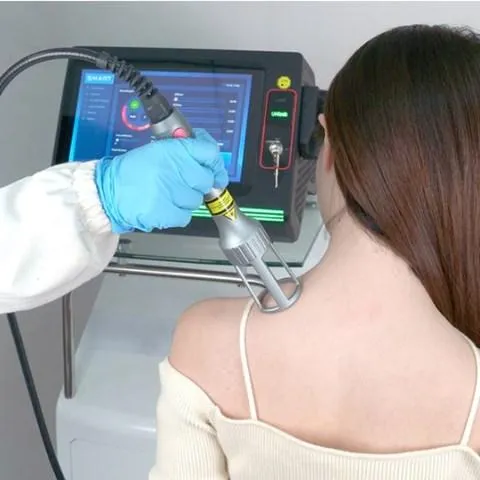
Class 4 laser therapy uses concentrated photobiomodulation energy to penetrate deep into tissue and stimulate the mitochondria — the power centers inside every cell. The result is accelerated healing, reduced inflammation, and restored function across a remarkably broad range of conditions. No needles. No surgery. No downtime.
Pain & injury
Sciatica, nerve pain, arthritis, soft tissue injuries, post-surgical recovery — including conditions where other treatments haven't reached
Neurological
Concussions, TBI, post-stroke recovery, dementia, balance and coordination — supported by peer-reviewed research on PubMed
First session offer
$37
Your first Class 4 laser therapy session — no obligation beyond that.
What's included
Consultation with Dr. Dow — your history, what you've tried, what you're hoping for
Comprehensive evaluation to confirm laser therapy is appropriate for your situation
Motion study X-rays if indicated
Your first full Class 4 laser therapy session
A clear explanation of what we found, what to expect, and what we'd recommend — no pressure, no packages at checkout
How it works
Think of it as charging a battery —
at the cellular level.
Every cell in your body runs on ATP — cellular energy produced by the mitochondria. When tissue is injured, inflamed, or degenerating, mitochondrial function declines and cellular energy drops. Healing slows. Pain persists. Function deteriorates.
Class 4 laser therapy delivers concentrated photobiomodulation energy deep into tissue — stimulating the mitochondria to produce significantly more ATP. More cellular energy means faster healing, reduced inflammation, better nerve function, and restored cellular activity across multiple systems simultaneously.
7,000+
Peer-reviewed studies on PubMed
Why Class 4 laser reaches where other therapies can't
The Class 4 designation refers to the power output of the laser — significantly higher than Class 3 devices. That power translates to deeper tissue penetration, reaching structures that surface-level treatments simply cannot access — nerve roots inside bony canals, deep joint tissue, spinal cord adjacent structures.
This is clinically meaningful for conditions like sciatica, trigeminal neuralgia, and spinal degeneration — where the affected tissue is inaccessible to most therapies but responds directly to laser energy delivered at the right depth and wavelength.
Pain and nerve conditions
Where Class 4 laser is particularly effective
The depth and power of Class 4 laser makes it effective across a broader range of pain and injury conditions than most therapies — including several where patients have been told there are limited options.
Even after spinal fusion or severe degeneration
Sciatica that hasn't responded to surgery or other treatment
Most sciatica treatments work around the nerve — decompressing the spine, reducing disc pressure, managing inflammation from the outside. What they can't do is reach the nerve swelling inside the bony canal where the nerve travels.
Class 4 laser can. The laser energy penetrates directly to the nerve, reducing swelling from within the bony canal itself — even in cases of severe spinal degeneration or after spinal fusion where the anatomy has changed. Patients who have been told surgery was their only option, or that their post-fusion pain is permanent, often find meaningful relief through this mechanism.
Sciatica
Nerve swelling reduction inside the bony canal — effective even post-fusion or with severe degeneration
Trigeminal neuralgia
One of the few therapies that can reach nerve inflammation inside the trigeminal canal directly
Neuropathy
Peripheral nerve pain and dysfunction — stimulates nerve repair and reduces inflammatory signaling
Arthritis
Joint degeneration, cartilage support, inflammation reduction — deep penetration reaches affected joint tissue
Sports injuries
Accelerated tissue repair for muscle, tendon, and ligament injuries — faster return to activity
Post-surgical recovery
Used pre and post-operatively — one of the safest therapeutic technologies available for surgical patients
A distinct application — neurological conditions
Beyond pain — what Class 4 laser does for the brain and nervous system
This is a separate and distinct application from pain management — one supported by a growing body of peer-reviewed research on PubMed, including studies published in JAMA on traumatic brain injury outcomes.
Photobiomodulation stimulates mitochondrial function in neural tissue the same way it does in musculoskeletal tissue — increasing cellular energy, reducing neuroinflammation (nerve inflammation), promoting neurogenesis (nerve regeneration), and enhancing synaptic activity. For conditions involving brain and nervous system dysfunction, this mechanism produces effects that no other non-invasive therapy currently replicates.
Concussions
Reduces neuroinflammation and supports neural repair after traumatic impact — including sports concussions
Traumatic brain injury
Transcranial PBM therapy — supported by peer-reviewed research including JAMA publications
Post-stroke recovery
Supports neural tissue repair and function restoration in the recovery period after stroke
Dementia & cognitive decline
Mitigates neuroinflammation, promotes neurogenesis, enhances synaptic activity and cognitive function
Cerebellar stimulation
Balance, coordination, and complex function restoration — stimulating cerebellar activity through targeted laser application
Brain fog & mood
Improved cognitive function, mood regulation, and reduction of anxiety and depression through neurological PBM effects
If you or a family member is dealing with any of these conditions and has found limited options through conventional medicine — this is worth a conversation. Dr. Dow will assess your specific situation honestly and tell you what's realistic.
The science
What's actually happening at the cellular level
Class 4 laser therapy works through photobiomodulation — the interaction of specific light wavelengths with cellular photoreceptors in the mitochondria and cell membrane. The effects extend well beyond the treated area because they operate at the level of fundamental cellular biology.
Gene expression
Red light activates beneficial genes and down-regulates genes associated with inflammation and cellular dysfunction
Cell signaling
Improves how cells recognize and communicate with each other — including immune cell recognition of invaders
Oxygen metabolism
Increases cellular oxygen utilization — improving energy production and tissue vitality
Mitochondrial ATP
Stimulates up to 40% more ATP production — the direct fuel source for healing and cellular repair
Stem cell activation
Signals stem cells to release and activate — supporting tissue regeneration beyond standard healing
Immune modulation
Increases macrophage activity and decreases pro-inflammatory cytokines — supporting systemic immune function
Safety profile
Class 4 laser therapy is used pre and post-operatively in surgical settings — a meaningful indicator of its safety profile. It produces no known systemic side effects, requires no medication, and has no recovery period. The treatment itself is comfortable — most patients describe a gentle warming sensation in the treated area. With thousands of peer-reviewed studies on PubMed behind it, it's one of the most thoroughly researched non-invasive therapeutic technologies available.
Your first visit
What happens when you come in
01
We listen to your history first
Before anything else, Dr. Dow wants to understand what's been going on — how long, what you've tried, what helped temporarily, what didn't hold. For neurological conditions especially, understanding the full picture before recommending anything is essential.
02
A thorough evaluation
We assess the condition carefully — range of motion, neurological function, pain patterns — to confirm laser therapy is appropriate and to identify the precise treatment area and protocol. For neurological applications, the evaluation includes assessment of cerebellar and nervous system function.
03
Your first Class 4 laser session
The treatment itself is comfortable — most patients describe a gentle warming sensation. Sessions typically run 10–20 minutes depending on the condition and treatment area. Many patients notice a change immediately. We'll tell you honestly what to expect for your specific situation.
04
A clear picture of next steps
We'll walk you through what we found and what a realistic treatment course looks like — including how many sessions, how often, and what outcomes are reasonable to expect. You leave with real information. No obligation to continue beyond today.
An honest note
What Class 4 laser can and can't do
Class 4 laser therapy has strong clinical evidence behind it across a wide range of conditions. For the right patient with the right condition, results can be significant and lasting — including for conditions where patients have been told options are limited.
It isn't a universal solution. Some conditions respond more dramatically than others. Some patients see meaningful improvement after one or two sessions. Others need a full course of treatment to experience the full benefit.
For neurological conditions especially — TBI, post-stroke, dementia — we want to be clear that this is a supportive therapy that works alongside other care, not a replacement for medical management. What it offers is a meaningful addition to the treatment picture that most patients in these situations haven't been offered.
We'll tell you honestly at your first visit whether this is appropriate for your situation and what realistic expectations look like.
Dr. Dow
Class 4 Laser Therapy · Dow Chiropractic & Acupuncture, Madison WI
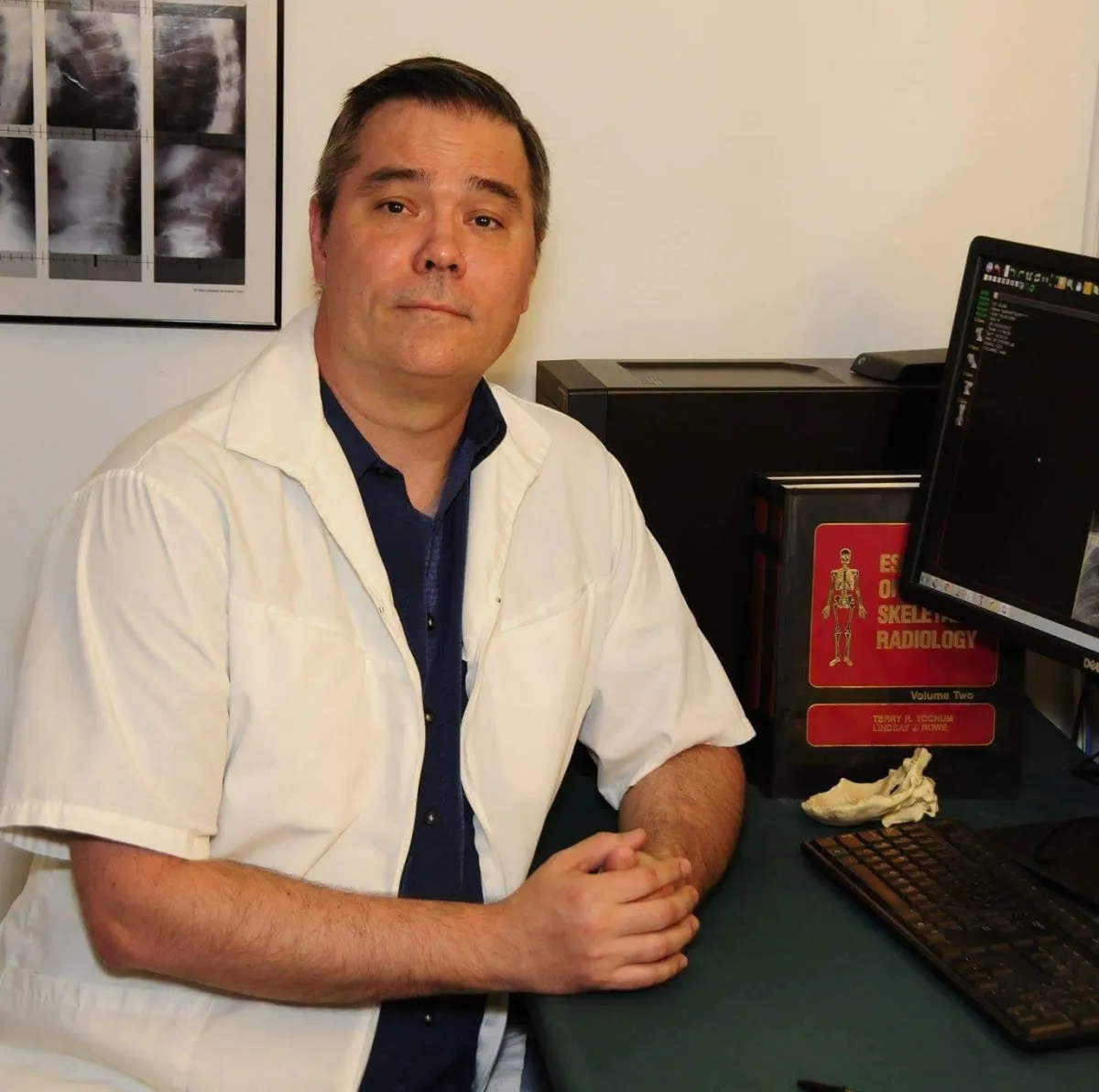
I think about Class 4 laser as part of what I call the cerebellar, parasympathetic, mitochondrial complex. These systems are deeply connected — treating one tends to stimulate the others. Laser charges the mitochondria, which energizes the nervous system, which supports parasympathetic function, which improves the body's capacity to heal. The battery analogy is the one I use most with patients — when the battery is charged, everything downstream works better. That's what Class 4 laser does at the most fundamental level. The $37 first session exists so you can experience that directly before deciding anything further.
Common questions
How is Class 4 laser different from other laser therapies?
Class 4 refers to the power output — significantly higher than Class 3 devices. That power produces deeper tissue penetration, reaching nerve roots inside bony canals, deep joint structures, and neural tissue that lower-powered devices simply cannot access. The clinical difference is meaningful for conditions requiring depth of penetration.

Can it help with sciatica after spinal fusion or severe degeneration?
Yes — and this is one of the more remarkable applications. Most therapies for sciatica work around the nerve from the outside. Class 4 laser delivers energy directly to the nerve, reducing swelling inside the bony canal itself. This mechanism works regardless of whether the spine has been fused or has significant degeneration — because it's addressing the nerve directly rather than the structural anatomy around it.
Is the neurological application appropriate for my family member with dementia or post-stroke?
It's worth a conversation. Photobiomodulation has meaningful peer-reviewed research behind its neurological applications — including neuroinflammation reduction, neurogenesis promotion, and cognitive function improvement. Dr. Dow will assess the specific situation at the first visit and give an honest picture of what's realistic. These applications work best as part of a broader care approach, not as a standalone treatment.
Is it painful or uncomfortable?
No — most patients describe a gentle warming sensation in the treated area. The treatment is comfortable throughout. No needles, no injections, no discomfort during or after.
How many sessions will I need?
It depends on the condition. At your first visit Dr. Dow will give you a realistic assessment of session count, frequency, and expected outcomes for your specific situation. We'd rather give you an accurate picture in person than a number that may not apply to your condition.
Is there any downtime?
None. Sessions typically take 10–20 minutes and most patients return to normal activity immediately afterward.
From patients
If you've been told options are limited —
this is worth a conversation.
The first session is $37 and includes everything — consultation, evaluation, and your first Class 4 laser treatment. No pressure beyond that visit. We'd rather earn your trust than fill a schedule.
615 North Sherman Ave Ste 22 Madison, WI 53704
(608) 233-3588
all content on this page shall not be used in any unauthorized development or recreation of content or pages similar.
this offer is limited to new patients only and has a limit of one purchase per person for the initial $37 payment offer. Additional sessions are available from the office directly at an additional cost per treatment which is outlined at the time of your initial appointment.